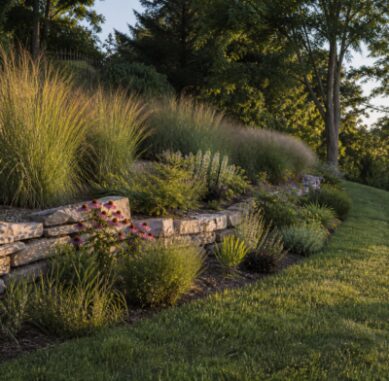
Order of work: How is a Nashville leaf-removal scope defined?
Mature canopy, sloping lawns, wet leaves, and drainage channels can make Middle Tennessee cleanup property-specific. Count the collection areas, note bed and turf boundaries, and document whether Metro yard-waste handling or on-site reuse is part of the work.
Nashville Pro Landscape handles leaf removal in Nashville and the suburbs around it, from a single cleanup to a full fall program. Seasonal leaf removal runs $150 to $500 for most yards, and every load gets hauled away. Call now and we’ll give you the next open day on the route, ahead of the heavy November drop.
Call (615) 334-9088 or request a free quote. Give us the address and a rough count of the big trees, and we’ll price your yard instead of an average one.
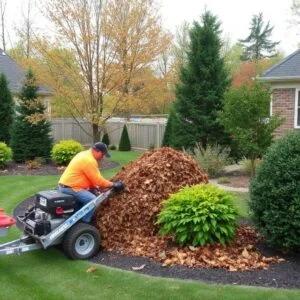
How much does leaf removal cost in Nashville?
Seasonal leaf removal in Nashville runs $150 to $500 for a typical yard. A full fall cleanup, with beds cut back and debris hauled off, runs $200 to $500, and a heavily wooded lot with a lot to haul can reach $250 to $700 a visit. Tree count and haul volume set the number.
| Service | Typical Nashville range |
|---|---|
| Leaf removal, seasonal | $150 to $500 |
| Spring or fall cleanup | $200 to $500 |
| Seasonal cleanup with heavy haul-off | $250 to $700 per visit |
| Fall aeration and overseeding for fescue | $200 to $500 |
Those figures match our lawn care pricing guide and 2026 cost guide, so the number on this page is the number you’ll see everywhere else on the site. What moves your price inside the range:
- Canopy. How many mature hardwoods hang over the lawn, yours and the neighbor’s.
- Access. Lot size, slope, and whether a gate or fence keeps the larger equipment out of the back yard.
- Hand work. How much bed, ground cover and shrub border has to be cleared carefully instead of blasted with a blower.
- Haul volume. We haul every job, so more leaves means more trailer space and more time at the disposal site.
- Timing. A yard cleared in stages has less to move each visit than one that waited until the week before Christmas.
When should leaves be removed in Nashville?
Start in late October and plan on more than one visit. The National Park Service says hardwoods near Nashville begin turning around the middle of October, and our own lawn calendar puts the main leaf cleanup in November with the last one in December. Holding out for bare trees leaves the grass covered for weeks.
- Late October: first pass once the early drop is down. Nashville’s average first frost lands around October 28, so this visit usually falls right around it.
- November: the heavy month, and the visit that matters most for the lawn. Our calendar also puts fescue’s winterizer feeding in early November.
- December: the final pass. Beds cleared, hard surfaces blown off, and the yard put away for winter.
The Park Service names maple, hickory and oak as the hardwoods that carry the color along the Natchez Trace, and those same trees shade a lot of Nashville lawns. They don’t all let go the same week, which is exactly why a single visit rarely finishes the job under mature canopy. A newer lot with young trees can often get by with one or two visits.
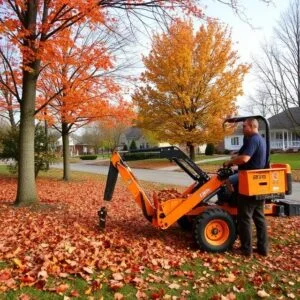
Why can’t leaves sit on a fescue lawn until spring?
Because fall is when a Nashville fescue lawn rebuilds. Most lawns here are cool-season tall fescue, and September is the prime month to aerate and overseed it, so the new grass is only weeks old when the leaves come down. Our lawn calendar lists November leaf cleanup as the job fescue can’t do without.
University of Tennessee Extension’s seeding window for tall fescue runs August 20 to September 15, at 5 to 8 pounds of seed per 1,000 square feet. Fescue is a bunch grass. It doesn’t send out runners, so it can’t creep back into a spot that died under a wet pile, and the only fix is more seed next fall. If you paid $200 to $500 for aeration and overseeding in September, leaf removal is what protects that money.
Bermuda and Zoysia lawns go dormant in November, so they’re more forgiving. They still don’t love a soggy layer sitting on them all winter, and the leaves have to come up before spring green-up either way.
What does our leaf removal process look like, step by step?
Every visit follows the same order: quote, walk the yard, clear beds onto the lawn, gather the lawn, open the drainage paths, haul, then blow off the hard surfaces. Working from the house outward keeps leaves from landing in places we’ve already cleared.
- Quote. You call or send the form with the address and a rough tree count. You decide between a single cleanup and a program of visits. Most quotes take a short phone call, and wooded lots get a quick look in person first.
- Walk the property. The crew notes gates, drains, downspouts, pet areas and anything fragile in the beds before a blower starts. If there’s a bed you want left alone for pollinators or winter cover, this is when you say so. A few minutes.
- Clear the beds and edges. Beds, shrub borders, window wells, fence lines and the space around the AC unit get blown or raked out onto open lawn. This is the slow, careful part of the job.
- Gather the lawn. Blowers, rakes and tarps on tight lots, a bagging mower where the leaf layer is light enough. Your call here is whether any shredded leaves stay behind for compost or bed cover.
- Open the drainage paths. Drain inlets, swales, downspout outlets and the curb line get cleared by hand so water has somewhere to go.
- Load and haul. Everything goes on the trailer and leaves with us. Nothing stays at the curb.
- Final blow-off and check. Driveway, walks, porch and patio, then one last lap around the yard. A typical quarter-acre lot takes a crew a couple of hours. A heavily wooded lot can take most of a day.
Gutters are a separate line on the quote because that’s ladder work. While we’re there we’ll flag anything we uncover, like a sunken sprinkler head that needs sprinkler repair or a low spot that holds water.
Does Metro Nashville pick up leaves at the curb?
Yes, but only four times a year, and only if they’re bagged the right way. Metro’s brush trucks work 12 routes on a rotating schedule, leaves and grass clippings must be in biodegradable paper bags, and yard waste is banned from the trash cart. One route can take one to three weeks to finish.
- Plastic bags of leaves don’t get collected. Paper only.
- Don’t blow or sweep leaves into the street, sidewalk or bike lane, and keep them out of medians, ditches and storm drains. Dumping yard waste in a waterway violates Metro Code Title 15, Chapter 64.
- Collection covers single-family homes in the Urban and General Services Districts. Metro doesn’t collect on private streets or in satellite cities such as Forest Hills, Berry Hill and Belle Meade. Those cities set their own service.
- The Nashville Waste Wizard shows your route’s next start date. Because collection is quarterly, some months won’t show a date at all.
- Davidson County residents can drop yard waste free at the Living Earth sites on Elm Hill Pike and Centennial Boulevard. Trailers pay a fee.
- Burning isn’t an option. Asked whether residents can get a permit to burn brush or leaves in the yard, the Fire Marshal’s Office answers with one word: no.
Do the math on a quarterly truck and a leaf drop that lasts from late October into December, and you can see the problem. Bags can sit at the curb for weeks, and paper bags don’t hold up well in a wet November.
What are the leaf rules in Brentwood, Franklin, Hendersonville and Mt. Juliet?
Every city around Nashville handles leaves differently. Franklin vacuums loose leaves at the curb from October into January, Brentwood and Hendersonville want leaves in paper bags, and Mt. Juliet’s chipper crews won’t take loose leaves at all. Know your city’s rule before you rake anything to the street.
| City | How leaves are collected | Rule that trips people up |
|---|---|---|
| Nashville (Metro) | Quarterly brush routes, leaves in paper bags | No plastic bags, and nothing blown into the street |
| Franklin | Loose-leaf curbside collection by the Streets Department. The 2026 to 2027 season starts October 5 and runs into the week of January 4. | Two zones split at Highway 96, each picked up every other week. Piles go in front of the house, 10 feet from mailboxes and vehicles, 5 feet from storm drains, with no sticks mixed in, ready by 7:00 a.m. |
| Brentwood | Monthly brush collection on residential streets, leaves and clippings in paper bags | The service is for work the homeowner did. Debris from a hired crew has to leave with that crew. |
| Hendersonville | Paper yard waste bags collected weekly, at the curb by 6:00 a.m. Monday | Bags must weigh 40 pounds or less. No limbs, dirt or mulch in the bags. |
| Mt. Juliet | Chipper service for brush on public streets | No vines or loose leaves accepted, and nothing from commercial trimming |
Those rules come from each city’s own public works page, and they change, so check your city’s site for this season’s dates. The pattern is consistent, though. Nashville and Brentwood both say debris from a hired service has to leave with that service, and Mt. Juliet’s crews won’t accept it either. That’s how we quote every job anyway.
Do you haul the leaves away?
Yes, every time. Metro’s guidelines say leaves and brush from a commercial landscaping service must be disposed of by the company and can’t be left for city collection, under Metro Code 10.20.085. So our quote covers loading and hauling, and you won’t be looking at a row of bags waiting on the quarterly truck.
Metro’s own advice to homeowners is worth repeating: if you hire someone, make sure hauling is included in the price. Ask that question of anyone who quotes you, us included. A low number that leaves thirty bags at your curb isn’t a low number.
Want to keep some? Tell us at the walk-through. We can leave shredded leaves in a corner for your compost pile or spread them as winter cover in a garden bed.
What does a typical Nashville leaf job look like?
It depends on the canopy more than the lot size. These are typical scopes, written as examples and not as jobs we’re claiming to have done, with price ranges taken from our published cost pages. Your quote comes from your own yard, and we’ll tell you which of these it looks most like.
- Typical newer subdivision lot, young trees. One or two visits. Lawn and beds cleared, hard surfaces blown off, one light trailer load. Usually sits at the low end of the $150 to $500 seasonal range.
- Typical quarter-acre lot with two or three mature hardwoods. The kind of yard common in older parts of Bellevue, Old Hickory and East Nashville. Two or three visits from late October to December, beds cleared by hand, full haul-off. Usually mid-range.
- Typical older-canopy lot, the Green Hills kind. Big oaks and maples over most of the lawn, deep beds, ground cover that traps leaves. A visit in each of the three windows, and the heavy-haul figure of $250 to $700 per visit applies when the volume is there.
- Typical fescue renovation yard. Aerated and overseeded in September for $200 to $500, then kept clear through November so the seedlings get light. Leaf visits are lighter and more frequent, and nobody drags tarps across new grass.
Why do leaves cause drainage trouble on Nashville clay?
Nashville sits on limestone-derived clay that drains slowly, so water already tends to pool and run off instead of soaking in. Pile wet leaves over a drain inlet, a swale or a downspout outlet and that runoff has nowhere to go. It ends up standing in the lawn or against the foundation.
That’s why clearing drainage paths is a step in every visit and not an extra. It’s also why Metro tells residents to keep leaves out of ditches, catch basins and storm drains. If a wet spot sticks around after the leaves are gone, the problem is grading or soil, and our Nashville soil and drainage guide and drainage solutions page cover the fixes.
Can my mowing service handle the leaves?
For the light early drop, yes. On our weekly mowing routes the mower shreds a thin scatter of leaves as part of the normal cut. When the canopy lets go in November a mower can’t keep up, and a dedicated cleanup with blowers and a haul-off is the right tool for the job.
Leaf work ties into bigger projects too. With the beds empty you can see the bones of the yard, which makes fall cleanup a good time to plan landscape design changes or lay out a hardscape project. And if the leaves were hiding a broken head, the irrigation crew can look at it before winterizing.
Do you handle spring cleanups too?
Yes. A spring cleanup runs $200 to $500 and covers what winter left behind: leaves that packed into beds and corners, fallen sticks, and perennials and grasses that need cutting back before new growth. We like to have it done before weekly mowing starts back up in March.
Timing matters here as well. Our calendar opens the crabgrass pre-emergent window in late February, and that application works better on a lawn that isn’t wearing a layer of last year’s leaves.
Where in the Nashville area do you remove leaves?
We remove leaves across Nashville and Davidson County, including Green Hills, Bellevue, East Nashville and Old Hickory, and out through Brentwood, Franklin, Hendersonville, Mt. Juliet, Smyrna and La Vergne. Curbside rules change from city to city, so outside Metro’s routes we follow whatever your own city requires.
Local pages: Brentwood, Franklin, Murfreesboro, Columbia and Thompson’s Station, or see all the areas we serve.
Ready to get on the schedule? Call (615) 334-9088 or get a free written quote. The earlier you call, the better your pick of days.
What sequence should organize Leaf Removal?
Put the Nashville leaf cleanup request into a property details covering affected areas, constraints, desired decisions, and available records. Require separate statements for scope, responsibility, payment, and revisions.
Process Overview
- Site assessment and consultation
- Written estimate with line-item scope
- Scheduled work window confirmed
- Crew executes against the written estimate
- Completion walkthrough with the homeowner